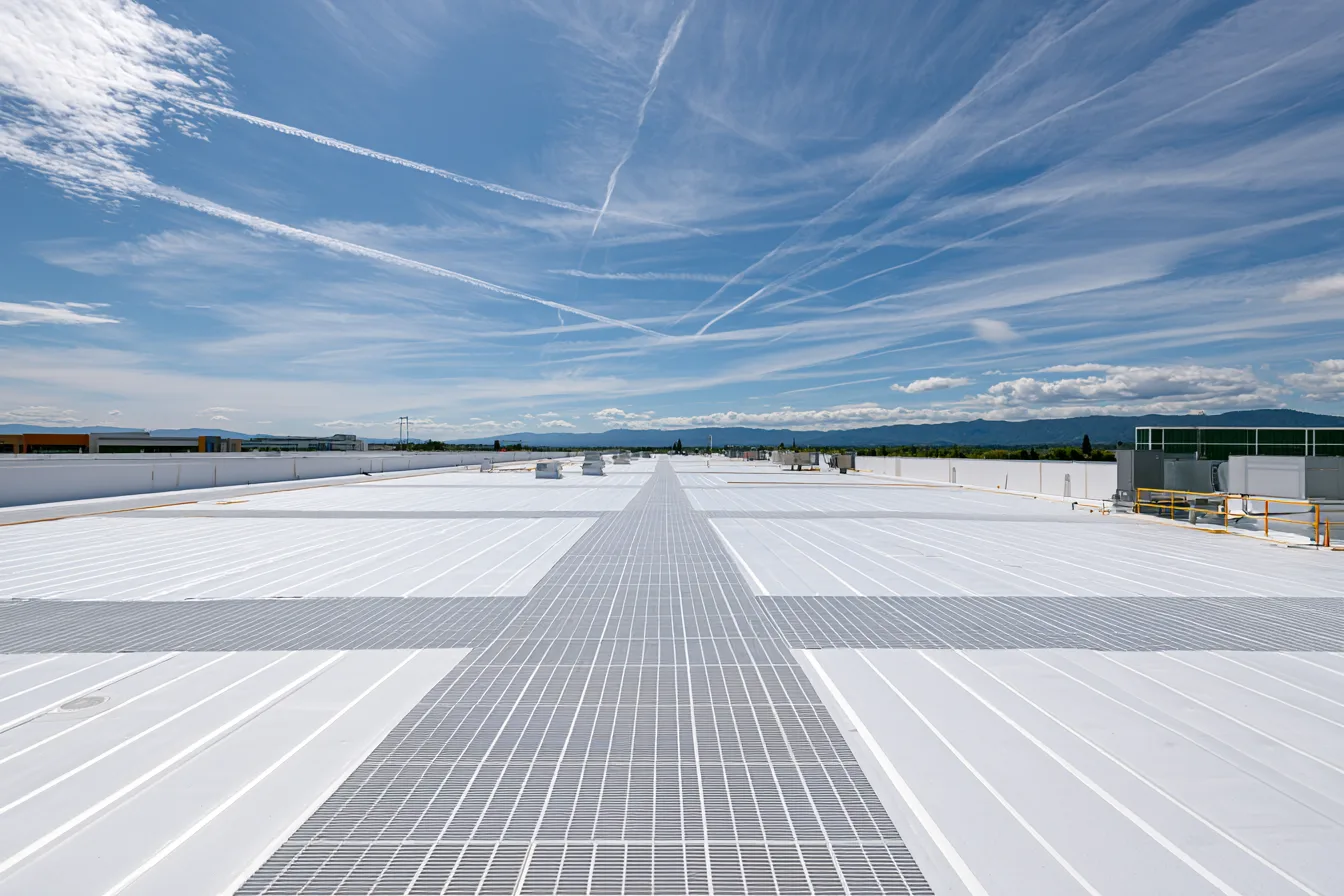
What has to happen before a commercial roof can be coated?
A fresh coating is appealing when a commercial roof looks tired but a full replacement would disrupt the building. The useful question is what can stay beneath that new surface. Coating a suitable roof is a restoration project; coating over wet or failed layers leaves the underlying problem in place.
Start with the roof beneath the new surface
A coating forms a new protective surface over an existing roof. It relies on the roof beneath it for support and a secure connection. It does not replace the deck, rebuild loose insulation or turn a deteriorated membrane into a sound roof system.
That makes eligibility the first decision. A roof with repairable defects and sound adjoining material presents a different project from one with widespread failure. Our commercial roof coatings service explains how restoration fits alongside repair and replacement. The condition of the existing assembly determines which approach can address the problem.
A dry-looking surface does not settle the moisture question
The top of a roof can dry after rain while water remains in the layers below. A moisture assessment helps establish where wet material is present; looking at the surface alone cannot answer that question. Where the investigation needs openings in the roof, those findings help define the removal and repair area.
Wet membrane and insulation need attention before restoration. If the affected area is limited and the surrounding roof remains suitable, localized replacement can be part of the preparation. If damage continues through much of the assembly, the decision becomes a wider repair or replacement project. Applying more coating does not remove the trapped moisture.
The same distinction matters to the budget. A price for coating the surface does not describe the full work when damaged layers also need to come out. The inspection connects those two parts of the project before the finish is chosen.
The coating needs a sound connection to the existing roof
The existing membrane, previous coatings and repair materials all affect compatibility. Dirt, loose material and unsuitable patches can interrupt the bond between the old roof and the new coating. Preparation establishes a suitable surface; it is part of the roofing work, not a cosmetic wash at the end.
For example, GAF’s aged-TPO restoration guidance calls for moisture and adhesion checks, replacement of wet material, cleaning and preparation suited to the system. An adhesion test helps determine whether the chosen coating will bond and whether primer is required. Those instructions apply to the described system, rather than every roof or every liquid coating.
This is why the roof’s identity matters. A record of the membrane or an earlier restoration can help the roofer identify what is already there. If you have that information, share it. You do not need to identify the product yourself before asking for an inspection.
Seams, drains and equipment curbs come before the finish
The wide open roof area is only part of the work. Water also meets seams, drains, pipe penetrations and the raised curbs beneath equipment. Open seams and failed connections need a compatible repair before the roof receives its continuous finish.
A blocked drain and a split seam are different problems. One interrupts the water’s exit; the other provides an opening into the roof. Coating alone does not correct either condition. The flat-roof repair discussion follows these details and the adjoining material that a repair needs to reach.
Keeping the details in view also avoids treating a uniform color as proof of a complete repair. The preparation has to address the connections that are easy to lose beneath a new surface.
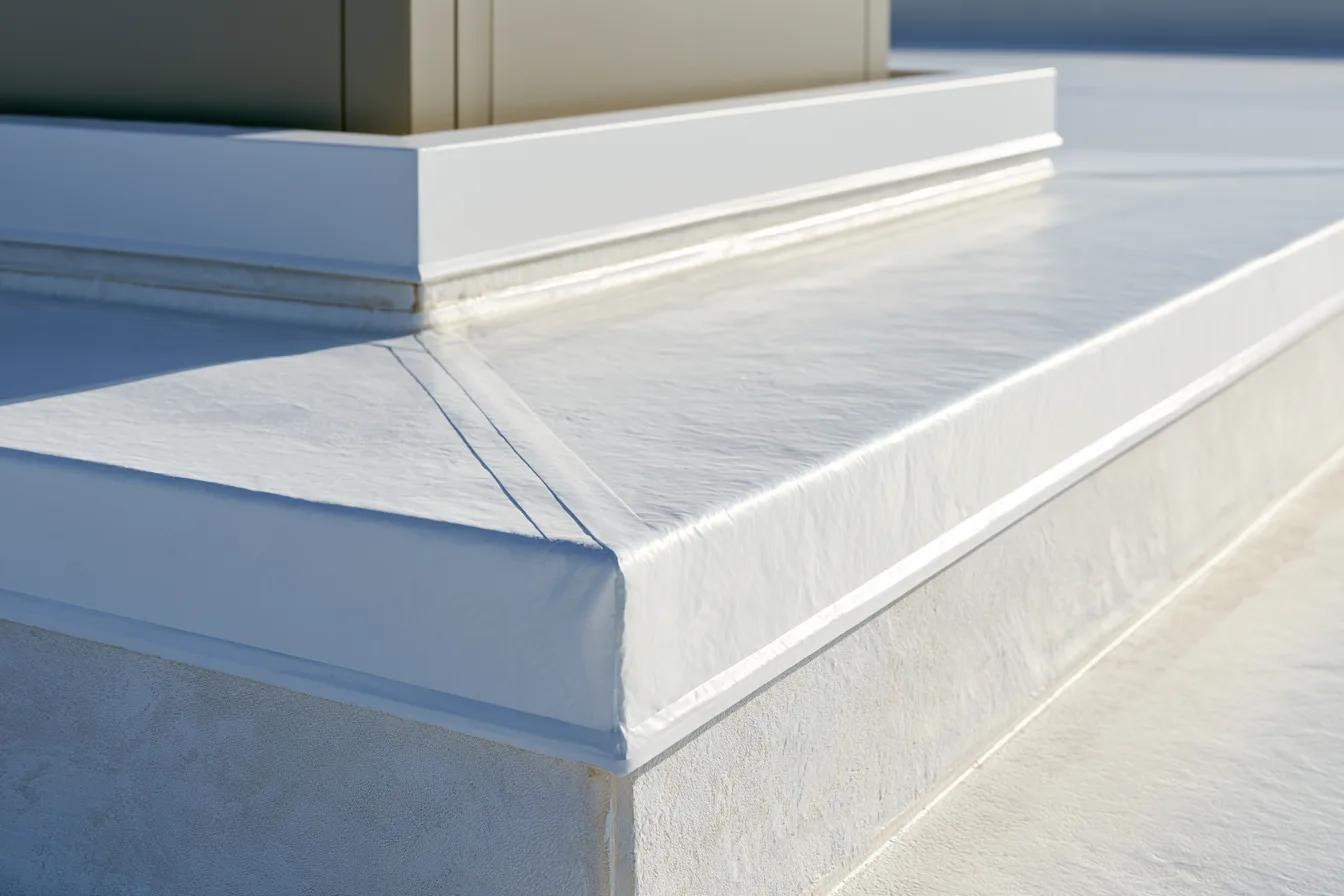
Fit the roof work around an occupied Addison building
An occupied building needs a practical sequence as well as a roofing specification. The roofer needs access to the work area, space for materials and a plan for any removed roofing. Tenant entrances, deliveries and equipment service routes should remain part of that conversation.
Work around rooftop units can involve another trade. If equipment needs service or removal, that work must fit the roofing sequence so completed details are not immediately disturbed. Weather and the selected system’s application conditions also affect when preparation and coating can proceed.
For an Addison property, start with the roof concern and how the building is used. Tell us about an active leak or a known access restriction. A free roof inspection gives us a place to start, including a roof walk when conditions allow, before choosing repair, restoration or replacement.
Find out whether your commercial roof is ready for restoration.
Tell us about the building, the roof concern and any access arrangements. Start with a free commercial roof inspection in Addison.