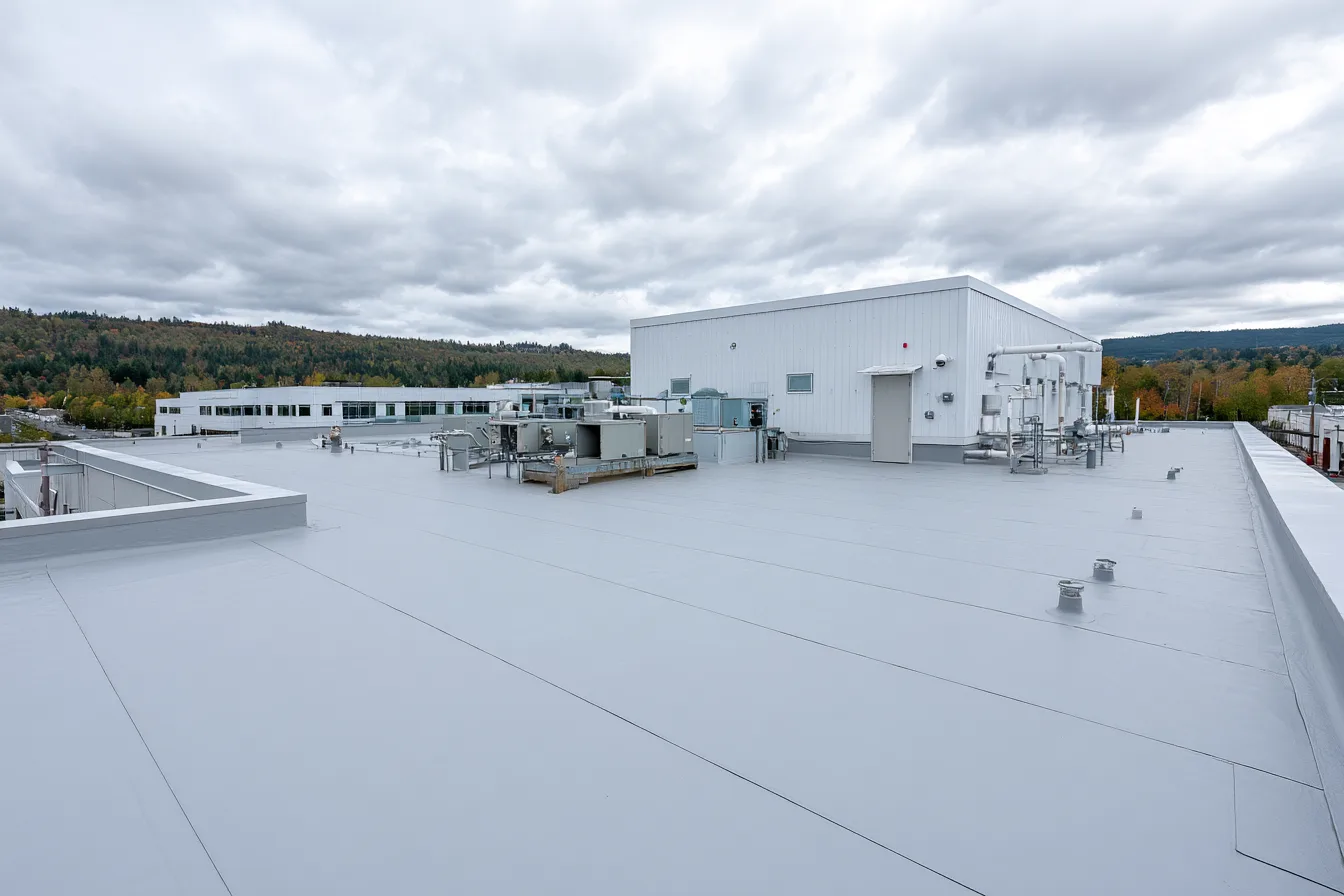
Commercial flat roof repair in Addison, TX
A commercial roof leak needs the source, wet layers and drainage considered together. Get repair help for the roof over your Addison building.
Find the break in your Addison flat roof
Water over a sales floor or inside an office may start at a seam, drain or equipment curb elsewhere on the roof. On a low-slope assembly, water can move between layers before finding a way into the building. The stain locates the indoor problem, but it does not establish the repair boundary outside.
We examine the installed roof system and follow the likely water path. Open membrane, failed flashing and poor drainage call for different repairs. The material matters too: a TPO weld, an EPDM repair and work on a granular roof are not interchangeable details.
The building needs to be part of the repair plan. Roof access, equipment service and the area being used below affect how work can be carried out. When material has to be opened, the sequence should keep the exposed area manageable and allow the affected layers to be put back together properly.
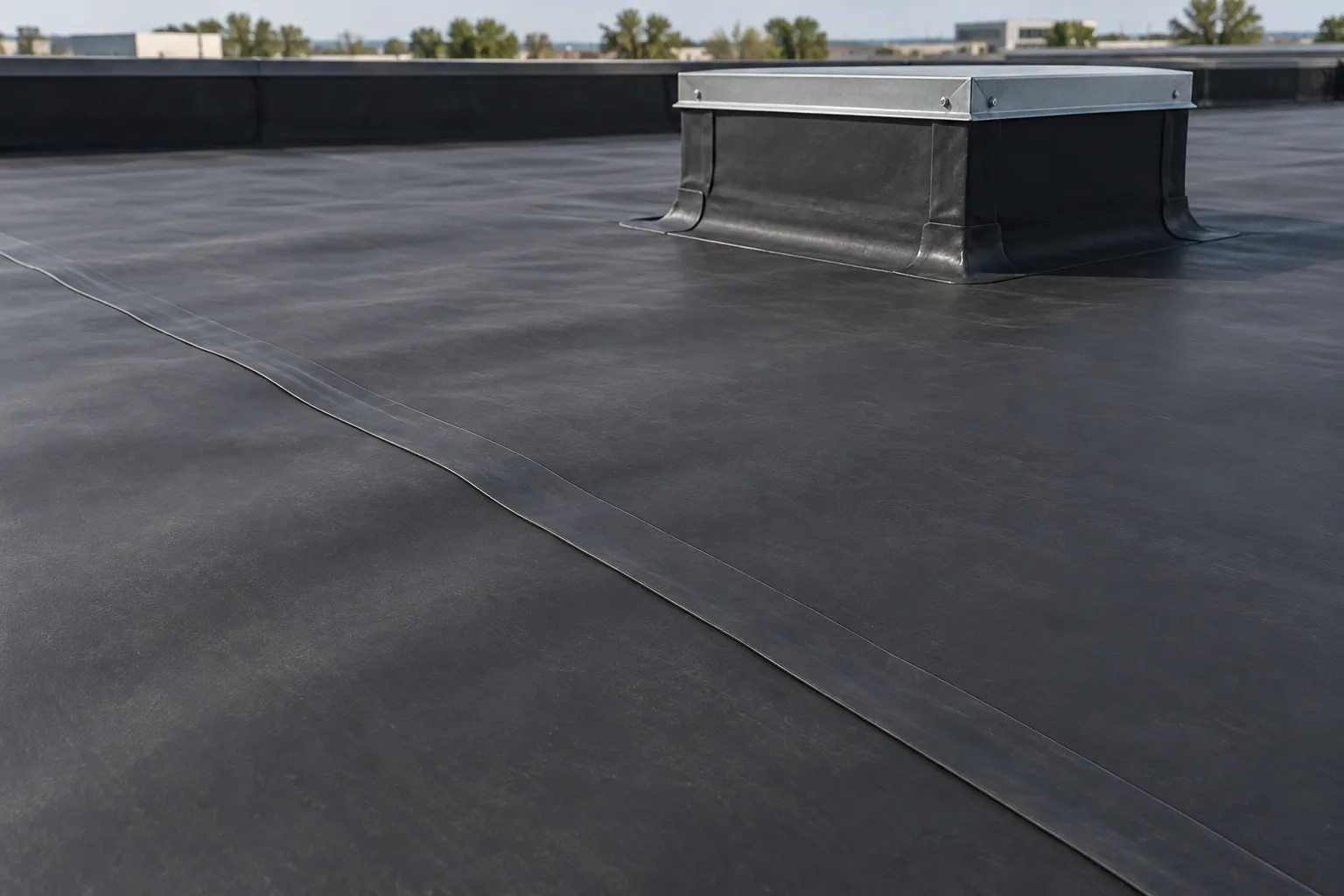
Flat-roof details that change the repair
- Field membrane and seams
A puncture or separated seam needs a compatible repair joined to sound, prepared roofing. The seam can be the visible failure while moisture has spread farther underneath. For thermoplastic systems, TPO roofing details explain the role of a welded connection.
- Equipment curbs and penetrations
Corners, transitions and the tops of flashings around rooftop equipment need separate examination from the open roof. Water from HVAC equipment can also resemble a roof leak. Roofing repairs address the membrane connection; an equipment fault needs the appropriate mechanical work.
- Drains, scuppers and low areas
Obstruction can hold water on a roof that otherwise drains. A low spot or a drain set above the surrounding roof creates a different problem. A patch may seal a damaged drain detail, but it cannot correct every reason that water remains there.
- Parapets and perimeter edges
Coping and edge details protect the top and outside of the roof boundary. Loose metal or open terminations can admit water behind the membrane. The repair needs to restore the attachment and connected flashing, not only cover the visible seam.
When a flat-roof repair becomes a wider project
A repair can stay local when the surrounding roof and support are sound. Repeated leakage or moisture beyond the visible opening changes what has to be reached.
- Wet layers extend past the patch
Saturated insulation and damaged support have to be identified and addressed within the repair. A small membrane opening can therefore require a larger area to be opened and rebuilt.
- Several details keep failing
When leaks recur across the field and multiple junctions, examine the roof as an assembly. More isolated patches may leave deteriorated attachment, material or drainage unresolved.
- The roof is sound enough to retain
After defects and wet areas are addressed, a suitable existing roof may be a candidate for restoration. Candidacy depends on the material, moisture and attachment; repair history alone does not establish it.
Addison flat roof repair FAQs
Why does a flat-roof leak appear away from the opening?
Water can travel along membrane laps, insulation joints or the deck before entering the room. The roof examination follows those possible paths and looks beyond the ceiling location.
Can ponding water be fixed with a patch?
Only if a particular failed detail is the problem the patch is meant to repair. A membrane patch does not create drainage slope. Blocked outlets, low areas and the position of drains need their own correction where they are causing the retained water.
Does wet insulation need to be removed?
Wet or damaged insulation generally needs removal within the affected work so the repair can be rebuilt on a suitable base. The extent of moisture has to be assessed; covering over it leaves the underlying condition unresolved.
Can repairs be planned around an occupied building?
Yes. The work plan can account for roof access, entrances, sensitive interior areas and rooftop service needs. Some repair steps affect the use of an area, so the sequence and access arrangements need to be discussed for that building rather than assumed.
Arrange access for a commercial roof repair.
Tell us where water is entering and how the building is used. Mention active leakage first so the conversation starts with the immediate concern.